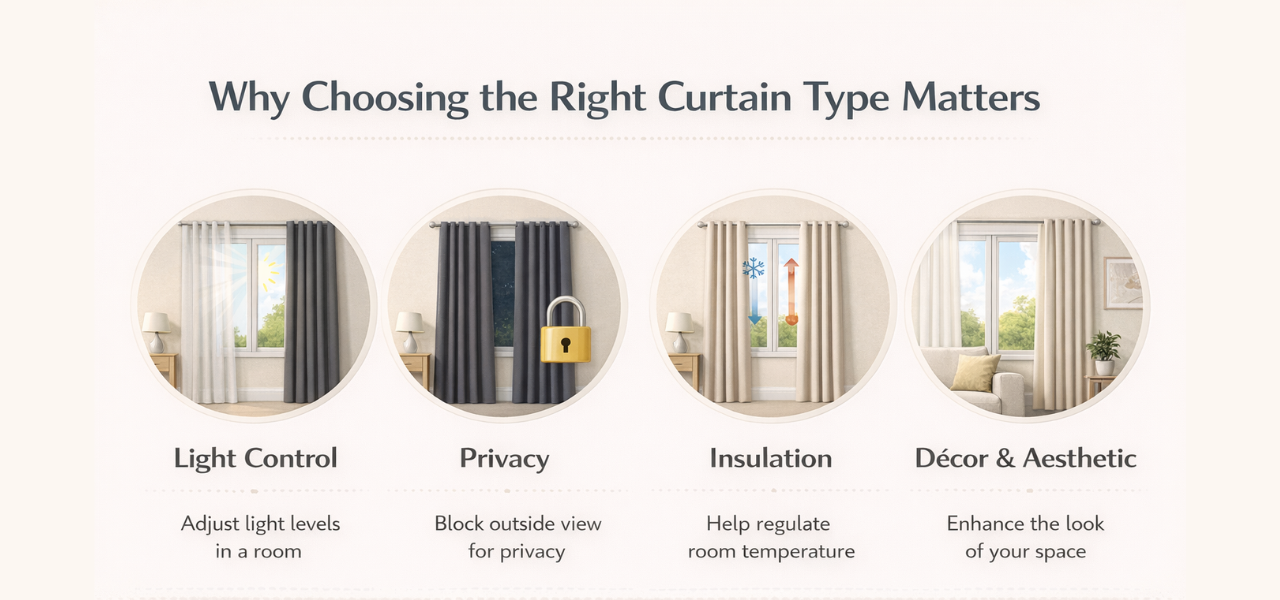
Introduction You’re standing in a home décor store, surrounded by rolls of fabric in every color imaginable. The salesperson asks, “What type of curtain are you looking for?” and you freeze. Eyelet, pencil pleat, blackout, sheer—the curtain types seem endless, and you’re not sure where to begin. If this sounds familiar, you’re not alone. Choosing curtains isn’t just about picking a pretty pattern. The right curtains control light, ensure privacy, regulate temperature, and completely transform how a room feels. The wrong choice? You’ll deal with harsh afternoon sun, faded furniture, or a style that clashes with your carefully planned interiors. This guide breaks down different types of curtains available in India—by fabric, function, style, and room—so you can make a confident decision that works for your home and budget. Why Choosing the Right Curtain Type Matters Before diving into specific curtain types, let’s understand why this decision deserves your attention: Light Control: Indian homes face intense sunlight, especially during summer months. The right fabric blocks harmful UV rays while maintaining brightness. Privacy: Ground floor apartments and homes facing busy streets need curtains that protect your personal space without making rooms feel like caves. Style Impact: Curtains occupy significant visual space. They can make ceilings look higher, rooms feel larger, or create a cozy atmosphere—depending on what you choose. Energy Efficiency: Thermal curtains can reduce air conditioning costs by blocking heat. In cities like Delhi, Ahmedabad, or Hyderabad, this makes a real difference to electricity bills. Weather Suitability: Monsoon humidity in Mumbai or Chennai demands different fabrics than the dry heat of Rajasthan. Your curtain fabric types should match your climate. Different Types of Curtains Based on Fabric Cotton Curtains Cotton remains the most practical choice for Indian homes. It’s breathable, easy to wash, and affordable. Cotton curtains work well in bedrooms and living rooms, offering moderate light filtering without complete darkness. Best for: Everyday use, moderate climates, homes with children or pets. Linen Curtains Linen brings a relaxed, elegant look to modern interiors. This natural fabric allows some light through while maintaining privacy. However, linen wrinkles easily—something to consider if you prefer crisp, ironed appearances. Best for: Living rooms, balconies, homes with minimalist or Scandinavian design themes. Velvet Curtains Heavy and luxurious, velvet curtains add drama and sophistication. They’re excellent light blockers and provide some soundproofing. The downside? Velvet attracts dust and requires professional cleaning. Best for: Master bedrooms, formal living rooms, homes in cooler regions like Shimla or Darjeeling. Polyester Curtains Budget-friendly and low-maintenance, polyester curtains resist wrinkles and fading. They’re available in countless prints and colors. While not as breathable as natural fabrics, modern polyester blends perform well in most Indian homes. Best for: Rental apartments, kids’ rooms, budget-conscious buyers. Silk Curtains Silk curtains scream elegance but demand careful maintenance. They fade quickly in direct sunlight and need dry cleaning. Consider silk blends instead of pure silk for better durability. Best for: Formal dining rooms, guest rooms, homes in humid climates (silk handles moisture better than velvet). Sheer Curtains Light, translucent sheer curtains diffuse harsh sunlight while maintaining a bright, airy feel. They offer minimal privacy but work beautifully when layered with heavier curtains. Best for: Layering, balconies, rooms with pleasant views, north-facing windows. Curtain Types Based on Function Blackout Curtains These blackout curtains block 99% of light and UV rays. Essential for shift workers, parents with young children, or anyone sensitive to morning light. They also reduce outside noise and regulate temperature. Indian Context: Perfect for west-facing windows in cities like Pune or Bangalore where afternoon sun becomes unbearable. Thermal Curtains Thermal or insulated curtains contain special lining that blocks heat transfer. They keep rooms cooler in summer and warmer in winter, directly cutting energy costs. Indian Context: Highly recommended for top-floor apartments in Delhi-NCR or homes in Rajasthan. Soundproof Curtains Made from heavy, dense fabrics, soundproof curtains reduce external noise—honking traffic, construction sounds, or noisy neighbors. While not completely soundproof, they make a noticeable difference. Indian Context: Essential for homes on main roads in Mumbai, Kolkata, or any metro city. Layered Curtains Combining sheer curtains with heavier drapes gives you flexibility. Use sheers during the day for filtered light and privacy. Close the outer layer at night for complete darkness. Indian Context: Ideal for living rooms where you need versatility throughout the day. Curtain Types Based on Style & Design The way curtains hang affects both function and appearance. Here are popular modern curtain styles: Eyelet Curtains Eyelet curtains feature metal rings at the top, creating neat, uniform pleats. They slide easily on rods and suit contemporary interiors. This style dominates Indian furniture stores because it’s practical and looks clean. Best for: Modern apartments, minimalist décor, easy DIY installation. Pencil Pleat Curtains Pencil pleat curtains have gathered fabric at the top, creating a traditional, tailored look. They use hooks and require curtain tape but offer adjustable fullness. Best for: Traditional or eclectic interiors, formal spaces. Pinch Pleat Curtains More structured than pencil pleats, pinch pleat curtains have fabric pinched together at regular intervals. They create elegant, timeless window curtain designs. Best for: Large windows, formal dining rooms, classic interiors. Rod Pocket Curtains The fabric forms a pocket at the top where the rod slides through. This creates a gathered, casual look. However, they’re harder to open and close frequently. Best for: Stationary curtains, valances, casual spaces like kitchens. Tab Top Curtains Fabric loops attach the curtain to the rod, creating a relaxed, cottage-style appearance. The loops become a design element themselves. Best for: Kids’ rooms, casual spaces, beach or farmhouse themes. Curtain Types for Different Rooms Living Room Your living room demands living room curtain ideas that balance style with practicality. Floor-length curtains in neutral tones or subtle patterns work universally. Consider dual layers—sheers for daytime, heavier drapes for evening privacy. Recommended: Cotton-linen blends, eyelet or pinch pleat style, colors matching your sofa or accent wall. Bedroom Bedroom curtain types should prioritize sleep quality. Blackout curtains in calming colors help you rest better. If complete
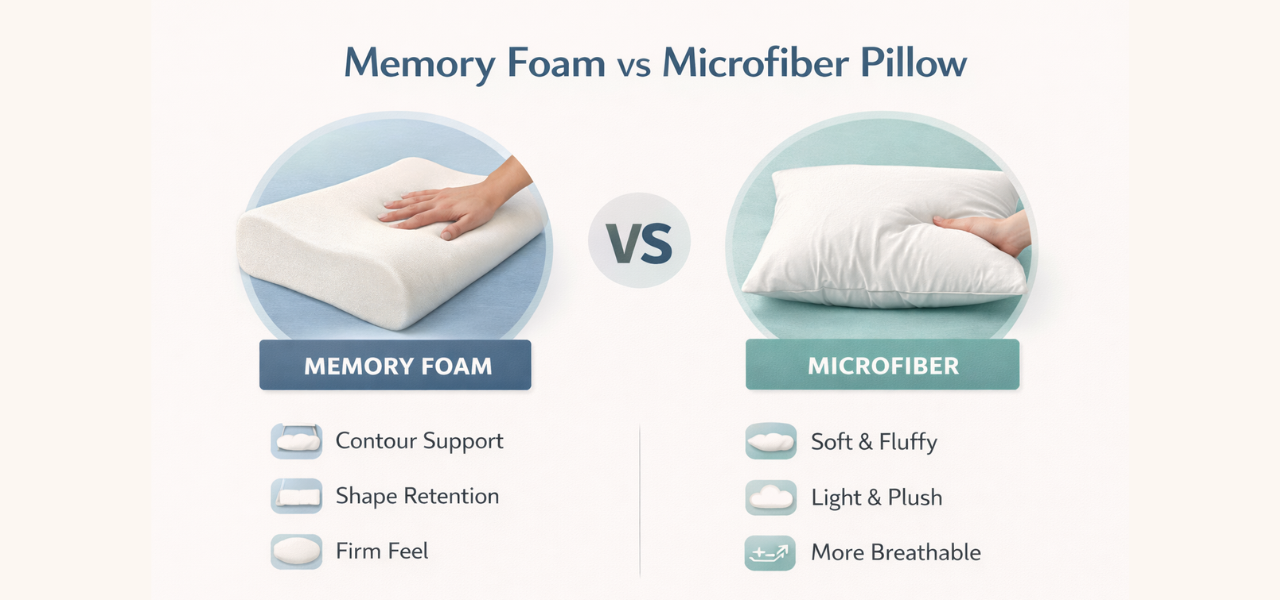
Memory Foam vs Microfiber Pillow – Which One Should You Choose?
Have you ever woken up with a stiff neck and wondered if your pillow is the real problem? You’re not alone. Thousands of Indians struggle to choose between memory foam and microfiber pillows when shopping online. The big question everyone asks is – microfiber pillow is good or bad?” If you’ve scrolled through Amazon or Flipkart, you’ve probably seen both these pillow types with similar ratings and wildly different prices. One costs ₹300, the other ₹1,500. Which one actually works? In this guide, we’ll break down everything you need to know about microfiber and memory foam pillows – from materials to comfort, support, price, and suitability for Indian weather. By the end, you’ll know exactly which pillow deserves a spot on your bed. What Is Microfiber Pillow? What is a microfiber pillow made of? Let’s start with the basics. A microfiber pillow is filled with ultra-fine synthetic fibers, usually polyester. These fibers are extremely thin – often finer than human hair. The microfiber pillow material is lightweight, soft, and fluffy, giving you that cloud-like feel when you rest your head. Microfiber pillows are made by spinning polyester into very fine threads and then stuffing them into a pillow cover. Because the material is synthetic and mass-produced, these pillows are affordable and widely available across India. Why are they so affordable? Manufacturing microfiber is cheap, and the material is easy to wash and maintain. That’s why you can find a decent microfiber pillow for ₹300–₹800 on most e-commerce platforms. What Is a Memory Foam Pillow? Memory foam is a special type of viscoelastic foam that reacts to heat and pressure. When you lay your head on it, the foam softens and molds to the exact shape of your head and neck. This contouring effect provides personalized support. Once you lift your head, the foam slowly returns to its original shape – hence the name \”memory\” foam. Memory foam pillows are designed for pressure relief. They distribute weight evenly and reduce strain on the neck and shoulders. This makes them ideal for people with cervical pain, office workers, and side sleepers. However, memory foam pillows are denser, heavier, and more expensive than microfiber pillows. In India, a good memory foam pillow can cost anywhere from ₹1,200 to ₹3,500. Microfiber Pillow vs Memory Foam – Key Differences Let’s compare both pillows side by side so you can see the differences clearly. Feature Microfiber Pillow Memory Foam Pillow Support Soft, less firm Firm, contouring support Comfort Fluffy, cloud-like Adaptive, molds to shape Durability Flattens in 6-12 months Lasts 2-4 years Price ₹300 – ₹800 ₹1,200 – ₹3,500 Breathability Good airflow Can retain heat Maintenance Machine washable Spot clean only Best For Budget buyers, guest rooms, kids Neck pain, side sleepers, long-term use Microfiber Pillow Is Good or Bad? (Honest Pros & Cons) Let’s answer the most searched question: microfiber pillow is good or bad? The truth? It depends on what you need. Here’s an honest breakdown of the pros and cons. Pros of Microfiber Pillow Affordable: You can buy a decent one for ₹300–₹600, making it perfect for students and budget shoppers. Soft and Fluffy: The pillow feels plush and comfortable when new. Lightweight: Easy to carry, adjust, or move around the bed. Easy to Wash: Most microfiber pillows are machine washable. Perfect for Indian summers when you need to wash bedding frequently. Good for Hot Sleepers: Microfiber breathes better than memory foam, so it stays cooler in humid weather. Cons of Microfiber Pillow Flattens Over Time: The biggest complaint. Most microfiber pillows lose their fluff within 6–12 months of regular use. Less Neck Support: Microfiber doesn’t provide the firm, structured support needed for proper neck alignment. Not Ideal for Chronic Pain: If you have cervical spondylosis or chronic neck pain, a microfiber pillow won’t offer enough support. Needs Frequent Replacement: You’ll likely need to replace it every year, which adds up over time. Bottom Line: A microfiber pillow is good for short-term comfort and budget purchases, but bad for long-term support and durability. Which Pillow Is Better for Neck Pain? If you suffer from neck pain, memory foam pillow benefits are hard to beat. Memory foam adapts to the natural curve of your neck, keeping your spine aligned while you sleep. This reduces pressure points and prevents waking up with stiffness or soreness. Microfiber pillow benefits don’t extend to chronic neck pain. The soft, loose filling compresses under your head’s weight, causing your neck to bend unnaturally. Over time, this can worsen pain. When microfiber works: Microfiber may work for occasional mild discomfort or if you’re a back sleeper who doesn’t need much elevation. But if you experience regular pain, invest in memory foam. Who should avoid microfiber: People with cervical spondylosis Side sleepers needing firm support Anyone recovering from neck injuries Office workers with tech neck If you’re searching for a pillow for neck pain, memory foam is the clear winner. Which Pillow Is Better for Indian Weather? Indian summers are hot and humid. Choosing a pillow for Indian weather means prioritizing breathability. Microfiber wins here. The loose, airy filling allows better airflow. It doesn’t trap heat like memory foam does. Memory foam and heat retention: Memory foam is denser, which means it retains body heat. In cities like Delhi, Mumbai, or Chennai during summer, this can make sleeping uncomfortable. Look for gel-infused memory foam pillows if you want the support without the heat. Washing frequency: In India, sweat and dust accumulate quickly. Microfiber pillows are machine washable, making them easier to maintain. Memory foam pillows can’t be washed – you can only spot clean the cover. Verdict: For breathability and easy maintenance in Indian weather, microfiber is better. But if you need support and can tolerate slightly more warmth, choose gel-infused memory foam. Who Should Buy a Microfiber Pillow? A microfiber pillow makes sense if you: Are on a tight budget: You need an affordable pillow for everyday use. Are setting up a guest room: Microfiber is cheap enough
How to Choose Curtains for Cream Walls
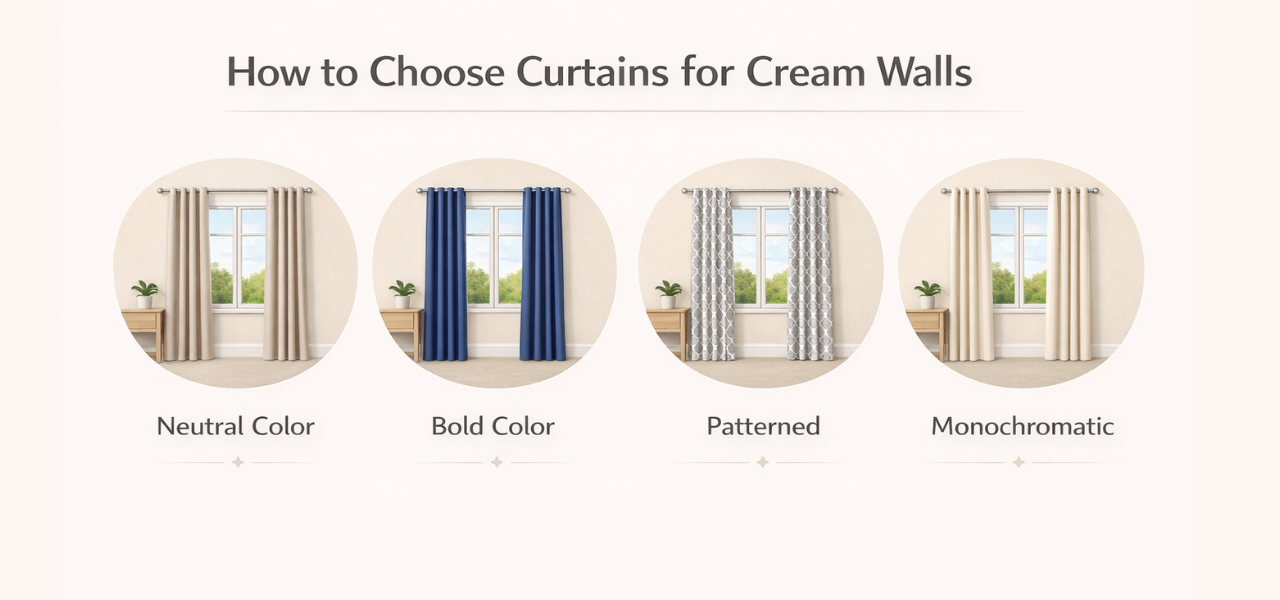
Introduction You’ve just moved into your new apartment in Mumbai or Bangalore, and you’re thrilled—until you look at those blank cream walls staring back at you. The builder’s standard neutral paint job is practical, yes, but now comes the real question: what curtains should you choose? Pick the wrong color, and your lovely home might look washed out or mismatched. Choose wisely, and those cream walls become the perfect canvas for a stunning interior. If you’re scratching your head wondering which curtains for cream walls will transform your space from bland to beautiful, you’re in the right place. This guide will walk you through everything—from color combinations to fabric choices—specifically tailored for Indian homes and weather conditions. Why Cream Walls Are So Popular in Indian Homes Before we dive into curtain choices, let’s understand why cream walls dominate Indian real estate. Cream is the ultimate neutral. It works beautifully in our bright, sunny climate without feeling too stark like pure white. Builders love it because it appeals to everyone, and homeowners appreciate it because it makes rooms feel larger—crucial in compact urban apartments. This versatile shade complements traditional wooden furniture, modern minimalist décor, and everything in between. Plus, cream walls reflect natural light beautifully, keeping homes brighter without harsh glare—a blessing during our long summer months. The challenge? Cream can look boring without the right accents. That’s where your curtain choice becomes absolutely critical. How to Choose the Right Curtains for Cream Walls Choosing curtains for cream walls isn’t about following strict rules—it’s about understanding your space and personal style. Let’s break it down into simple steps. Step 1 – Decide the Room Mood What feeling do you want when you walk into the room? For a calm, serene vibe: Think soft greys, muted blues, or gentle beiges. Perfect for bedrooms and reading nooks where you want to unwind after Mumbai’s traffic chaos. For luxury and elegance: Rich jewel tones work wonders. Deep emerald, sapphire blue, or burgundy curtains against cream walls create that five-star hotel feel at home. For bold and energetic: Don’t shy away from vibrant colors like mustard yellow, terracotta, or even burnt orange. These add personality and warmth, especially in living rooms and dining areas. For minimal and modern: Crisp white, charcoal grey, or even matching cream with interesting textures keeps things sophisticated and uncluttered. Step 2 – Consider Natural Light Indian homes often deal with extremes—either harsh afternoon sun or limited natural light in lower floors. For bright, sunny rooms: You need curtains that can handle the glare. Medium to dark colors like navy blue, olive green, or charcoal grey are practical choices. They reduce heat and protect your furniture from fading while looking stylish against cream walls. For low-light rooms: Stick to lighter shades. Soft beige, pale gold, or even white curtains will reflect whatever light enters. Avoid heavy, dark colors that make dim rooms feel like caves. Step 3 – Match With Furniture & Flooring Your curtains shouldn’t exist in isolation. Look at your existing furniture and floor tiles. Got dark brown wooden furniture? Warm curtain colors like gold, rust, or deep red create beautiful harmony. White or light grey modern furniture? You can experiment with cooler tones like mint, dusty blue, or lavender. For typical Indian vitrified tiles in beige or grey, most curtain color combinations for cream walls work well. Just ensure there’s enough contrast so your windows don’t disappear into the walls. Best Curtain Color Combination for Cream Walls Let’s get specific. Here are tried-and-tested curtain color combinations for cream walls that work beautifully in Indian homes. Beige & Taupe The safest choice for a cohesive, elegant look. Cream colour curtains in slightly deeper shades add subtle depth without drama. Perfect for formal living rooms or if you prefer understated décor. Pair with metallic curtain rods and textured cushion covers to avoid monotony. Grey – The Modern Favorite Light grey to charcoal—this shade has become incredibly popular in urban Indian homes. It’s contemporary, practical (hides dust well—important consideration!), and creates a sophisticated backdrop for colorful artwork and décor pieces. Navy Blue – Timeless Elegance Navy blue curtains against cream walls? Absolutely stunning. This classic combination adds depth and richness without overwhelming the space. It works equally well in traditional and contemporary settings. The dark blue also helps block intense afternoon sun—a huge plus. Olive Green – Natural & Calming If you love bringing nature indoors, olive or sage green curtains create a peaceful, grounded atmosphere. This curtain color combination for cream walls has gained popularity recently and pairs beautifully with indoor plants and natural wood furniture. Burgundy or Wine – Regal Touch For those who love traditional Indian aesthetics with a modern twist, deep burgundy or wine-colored curtains add warmth and luxury. They look especially beautiful in homes with ethnic furniture or during festival seasons when you want that extra richness. Mustard Yellow – Cheerful & Bright Mustard is having a moment in Indian interior design, and for good reason. These curtains add instant cheerfulness and warmth. Great for north-facing rooms that need a sunny boost. Works wonderfully with white, grey, or wooden furniture. Pastel Pink or Blush – Soft Romance For bedrooms, especially, soft pink or blush curtains against cream walls create a dreamy, romantic atmosphere. Don’t dismiss this as too girly—when done right with textured fabrics and minimal décor, it’s elegant and soothing. Are Cream Colour Curtains a Good Choice? This question comes up often. Can you use cream colour curtains on cream walls? Yes, but with strategy. Monochromatic schemes are sophisticated when done right. The key is playing with textures, patterns, and depths of cream. For instance: Choose curtains in a slightly warmer or cooler cream than your walls Opt for textured fabrics like jacquard, embroidered linen, or subtle patterns Add contrast through curtain rods, tiebacks, and surrounding décor When cream on cream works beautifully: In spacious rooms with lots of natural light When you have colorful furniture and décor as accents In minimalist, Scandinavian-inspired interiors
What Is Cotton Blend Fabric?
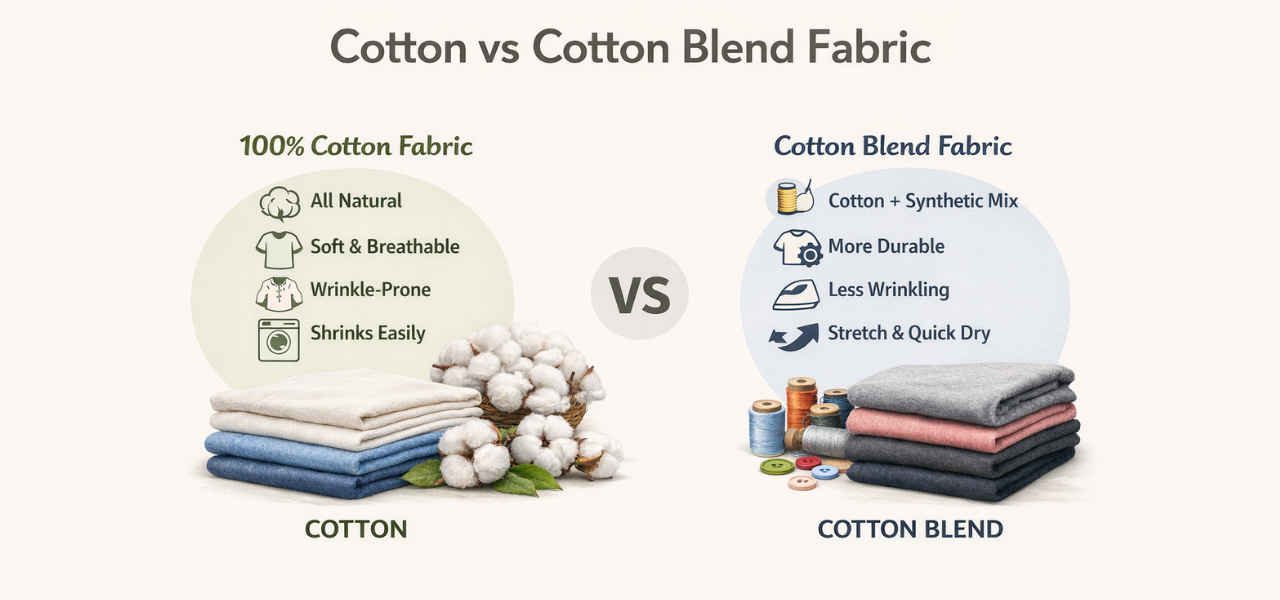
Introduction You’re shopping for bedsheets at a local store in Mumbai or browsing kurtas online. The label says “Cotton Blend” instead of “100% Cotton.” You pause. Is it good quality? Will it be comfortable in summer? Should you buy it or not? If you’ve ever faced this confusion, you’re not alone. Millions of Indian shoppers struggle to understand what is cotton blend fabric and whether it’s a smart choice for clothing or home décor. In this blog, we’ll break down everything about cotton blends — from its meaning and types to its pros, cons, and uses in India. By the end, you’ll know exactly what to look for before making your next purchase. What Is Cotton Blend Fabric? Cotton blend fabric is a textile made by combining natural cotton fibers with one or more synthetic or semi-synthetic fibers like polyester, spandex, rayon, or linen. Instead of using 100% cotton, manufacturers mix cotton (usually 50% to 80%) with other materials to improve specific qualities like durability, stretchability, wrinkle resistance, or cost-effectiveness. For example, a cotton-polyester blend (often called poly-cotton) is one of the most popular fabric choices in India for shirts, school uniforms, and bedsheets. Cotton Blend Meaning Explained Simply The term cotton blend meaning is straightforward: it’s a fabric that blends cotton with another fiber. Think of it like mixing tea with milk. Pure tea is strong but might feel too intense. Adding milk balances the taste. Similarly, blending cotton with polyester or spandex balances comfort with practicality. Cotton gives softness and breathability. The other fiber adds strength, stretch, or quick-drying properties. Together, they create a fabric that’s easier to maintain and more affordable than pure cotton. Types of Cotton Blend Fabrics Here are the most common types of cotton blends you’ll find in Indian markets: 1. Cotton + Polyester (Poly-Cotton) Most popular blend in India Ratio: Usually 65% cotton, 35% polyester Benefits: Wrinkle-free, durable, low maintenance Uses: Office shirts, school uniforms, bedsheets 2. Cotton + Spandex (Stretch Cotton) Contains 2-5% spandex for elasticity Benefits: Flexible, body-hugging, comfortable Uses: Jeans, leggings, fitted t-shirts 3. Cotton + Linen Combines breathability of both fibers Benefits: Lightweight, airy, less wrinkled than pure linen Uses: Summer kurtas, casual wear, home textiles 4. Cotton + Rayon Soft and silky texture Benefits: Drapes well, affordable, smooth finish Uses: Dresses, sarees, scarves Cotton vs Cotton Blend – What’s the Difference? Factor 100% Cotton Cotton Blend Comfort Highly breathable and soft Slightly less breathable Durability Wears out faster More durable and long-lasting Wrinkles Wrinkles easily Wrinkle-resistant Shrinkage Shrinks after washing Minimal shrinkage Price More expensive Budget-friendly Maintenance Requires ironing Easy to care for Best For Sensitive skin, summer wear Daily wear, office use This cotton vs cotton blend comparison shows that both have their place. Your choice depends on your needs. Cotton Blend Fabric Is Good or Bad? (Pros & Cons) Many people ask: cotton blend fabric is good or bad? The answer isn’t black and white. Let’s weigh both sides. Advantages of Cotton Blend Fabric More affordable than 100% cotton Resists wrinkles, saving ironing time Durable and long-lasting — doesn’t tear easily Low shrinkage after washing Easy to maintain — dries faster Versatile — works for clothing and home textiles Disadvantages of Cotton Blend Fabric Less breathable than pure cotton May feel warm in extreme heat Not ideal for sensitive skin (due to synthetic fibers) Less eco-friendly — polyester is non-biodegradable Can pill (form fabric balls) over time Overall, cotton blends are practical for everyday use but may not suit everyone, especially those with allergies or living in very hot climates. Where Is Cotton Blend Fabric Used in India? Cotton blend fabric uses in India are vast and varied: Clothing Office shirts and trousers School uniforms Casual t-shirts and jeans Ethnic wear like kurtas and salwar kameez Home Textiles Bedsheets and pillowcases Cushion covers Curtains and drapes Sofa upholstery Institutional Use Hospital linens Hotel bedding Restaurant uniforms Indian families prefer poly-cotton blends for daily use because they’re low-maintenance and budget-friendly. Is Cotton Blend Good for Indian Weather? India’s climate varies greatly, so the answer depends on where you live. For Summer: A polyester cotton blend can feel slightly warm compared to 100% cotton. However, modern blends with moisture-wicking technology work well for hot weather. If you live in Delhi or Rajasthan, choose blends with higher cotton percentage (70-80%). For Humidity: In coastal cities like Mumbai or Chennai, cotton blends dry faster than pure cotton — a big advantage during monsoon season. For Winter: Cotton blends offer enough warmth and comfort for mild winters in South India. So, is cotton blend good for summer? Yes, if the cotton content is high and the fabric is breathable. How to Identify Cotton Blend Fabric Before Buying? Here are practical shopping tips to avoid getting cheated: 1. Check the Label Look for fiber composition. It should clearly state percentages (e.g., 60% Cotton, 40% Polyester). 2. Feel the Fabric Pure cotton feels soft and natural. Blends feel smoother and slightly stiffer. 3. Burn Test (at home) Pure cotton burns with a steady flame and smells like burning paper. Polyester melts and smells like chemicals. Cotton blend does both. 4. Price Check If a “cotton” item is unusually cheap, it’s likely a blend. 5. Wrinkle Test Crumple the fabric. Pure cotton wrinkles instantly. Blends spring back. Conclusion So, what is cotton blend fabric? It’s a smart, practical choice that combines the comfort of cotton with the durability of synthetic fibers. Whether you’re buying shirts, bedsheets, or cushion covers, understanding cotton blend meaning helps you make informed decisions. While it’s not ideal for extreme heat or sensitive skin, cotton blends are perfect for everyday use in Indian households. They’re affordable, low-maintenance, and long-lasting. Buying Tip: For best results, choose blends with at least 60% cotton content. This ensures comfort without sacrificing durability. FAQs 1. What is cotton blend fabric made of? Cotton blend fabric is made by mixing natural cotton fibers with synthetic fibers like polyester, spandex, rayon, or linen. Common ratios include
Why Bazel Cushion Are Perfect for Modern Indian Homes
Bazel Cushions: Modern Indian homes are all about comfort, style, and personal expression. Small decor items like cushion covers can make a big difference in how your living space looks and feels. The right cushion covers can turn a simple sofa into a stylish and welcoming spot. This is where the Bazel cushion stands out. Bazel focuses on premium quality, modern designs, and practical comfort made for Indian homes. Whether you want a luxury look, a cozy feel, or a fresh update, Bazel offers options that match every need. In this article, you will learn why Bazel cushions are a smart choice and how they can improve the beauty and comfort of your home. What Makes Bazel Cushion Different When choosing cushion covers, quality and design matter the most. Bazel cushion are designed with attention to both style and durability. They are made to match modern Indian homes where people want both beauty and comfort. Unlike ordinary cushion covers, Bazel products focus on premium fabric, clean stitching, and modern prints. This makes them suitable for living rooms, bedrooms, and even office spaces. 1. Premium Fabric for Long-Lasting Use One of the biggest advantages of Bazel cushion is the quality of fabric. Bazel uses materials like velvet and other durable fabrics that feel soft and look premium. Good fabric gives several benefits: Soft and comfortable feel Long-lasting durability Better color retention Premium and rich appearance 2. Modern Designs That Match Indian Homes Design plays an important role in home décor. Bazel cushions are created with modern Indian tastes in mind. The designs are stylish but not too loud, making them suitable for different interiors. You can use the Bazel cushion in: Modern apartments Traditional homes Luxury interiors Minimalist spaces Bazel cushions improve Your Living Room Instantly The living room is the most used space in any home. It is where guests sit, and families spend time together. Adding a Bazel cushion can instantly improve the look of your living room. Even a simple sofa can look premium with the right cushion covers. Adds Style Without Major Changes: Many people think they need to buy new furniture to upgrade their home. But changing cushion covers is a much easier and more affordable solution. After getting the cushions, you will get a quick home upgrade, which is an affordable decoration option. These cushions has easy to change options that no need to replace any furniture. Creates a Premium and Comfortable Feel: Comfort is as important as design. The Bazel cushion not only looks good but also feels comfortable. Soft fabric helps you relax better. These cushion which are offered by Bazel especially useful for daily use, while watching TV, spending time with family, etc. Perfect Choice for Modern Indian Lifestyle Indian homes today are changing. People prefer clean, modern, and stylish interiors. Bazel cushion matches this lifestyle perfectly. They are designed for people who want modern décor without making things complicated. Suitable for Every Room: The cushion can be used in different rooms such as the living room, Bedroom, Guest room, Office space, etc. Easy to Maintain and Use: Bazel cushions are easy to use and maintain, as you can remove and clean them easily, which helps keep your home fresh and clean. Why Bazel is a Trusted Home Decor Brand in India Bazel is focused on providing quality home decor products specially made for Indian customers. The brand understands modern needs and offers products that combine style and comfort. Most of the customers trust Bazel just because of its Quality-focused products, Affordable premium décor, and Modern & practical designs. You can explore the latest collection here: https://bazel.in/ Conclusion Cushion covers are a simple but powerful way to improve your home décor. Choosing the right brand makes a big difference. Bazel cushions offer the perfect combination of quality, comfort, and modern design. They are made for modern Indian homes and suit different styles and spaces. With premium fabric, stylish designs, and easy maintenance, Bazel provides a practical and beautiful décor solution. If you want to upgrade your home in an easy and affordable way, Bazel cushions are a smart and reliable choice. They help you create a home that looks stylish, comfortable, and welcoming every day. Also See: Top Products Category Cushions Poufs & Stool Scarfs & Shawls Table Linen Wall Art & Wall Hangings Decoration Art of Illumination Curtains
What Is GSM in Cloth and Why It Matters
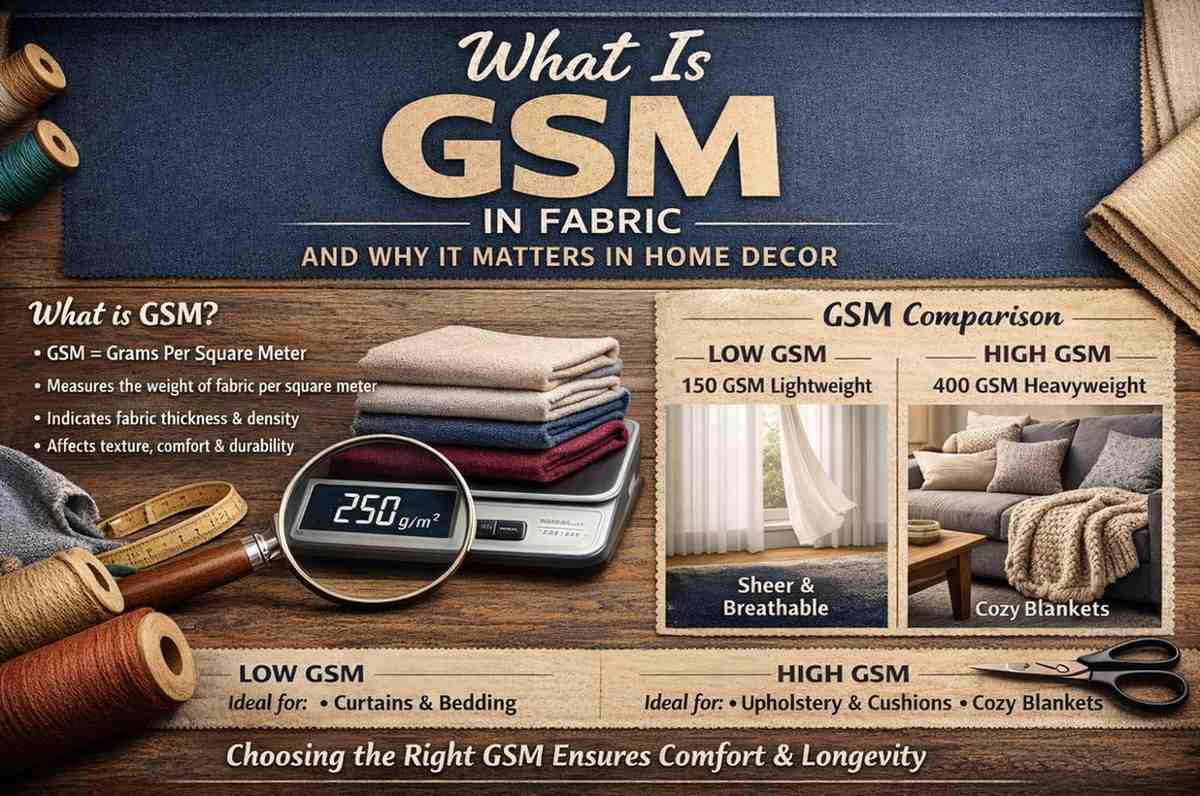
Have you ever scrolled through cushion covers or sofa fabrics online and noticed “GSM” mentioned in the product details? Most Indian home buyers come across this term but rarely understand what it means or why it should matter when choosing home décor items. Understanding what is gsm in cloth can completely change how you select cushion covers, sofa fabrics, bedsheets, and curtains. It’s not just a technical specification—it directly affects durability, comfort, and how premium your living room looks and feels. In this guide, we’ll break down everything you need to know about GSM in a simple, practical way that helps you make smarter buying decisions for your Indian home. What Is GSM in Cloth? GSM stands for Grams per Square Meter. It’s a measurement that tells you how much one square meter of fabric weighs. Think of it as the fabric’s thickness and density indicator. Higher GSM means the fabric is thicker and heavier. Lower GSM means it’s lighter and more breathable. For example, a 150 GSM cotton fabric is lighter and softer, while a 300 GSM velvet fabric feels heavy, structured, and luxurious. When you’re buying cushion covers or sofa throws, gsm in fabric helps you understand whether the material will feel flimsy or premium in your hands. This simple number gives you a clear idea of fabric quality before you even touch it—especially helpful when shopping online. Why GSM in Fabric Matters for Cushion Covers and Sofa Décor When it comes to home textiles, especially cushion covers and sofa fabrics, GSM plays a critical role in how your décor performs in real life. Durability for daily use: Indian living rooms see constant action—kids jumping on sofas, pets lounging, guests sitting during festivals. Higher GSM fabrics withstand daily wear and tear much better than lightweight options. Premium texture and feel: A cushion cover with good GSM feels rich and substantial when you touch it. Low GSM fabrics can feel cheap or flimsy, even if they look good in photos. Shape retention: Ever noticed how some cushion covers look saggy after a few washes? That’s often due to low GSM. Thicker fabrics hold their shape beautifully, keeping your sofa looking neat and styled. Better opacity: Low GSM fabrics can be see-through, meaning the inner cushion or lining might show through. This ruins the aesthetic, especially with lighter colors like white, beige, or pastels. Easy maintenance: Higher GSM fabrics tend to be more forgiving with stains and washing. They don’t lose color or texture as quickly, which is essential for busy Indian households. Whether you’re styling a cozy corner or refreshing your entire living room, gsm for cushion covers should be a key factor in your decision. Which GSM Fabric Is Good for Cushion Covers? Now that you understand what GSM means, let’s talk numbers. Here’s a practical breakdown based on usage: 120–150 GSM: These are lightweight fabrics, ideal for decorative cushion covers that aren’t used often. Perfect for seasonal styling or guest bedrooms where cushions are mostly for show. 160–220 GSM: This is the sweet spot for everyday cushion covers. Great for daily use in living rooms, balances comfort and durability, and works well for Indian homes with regular family activity. 220–300 GSM: Premium, structured fabrics that feel luxurious. Best for statement cushions, designer sofas, or homes where you want that high-end boutique hotel look. 300+ GSM: Heavy-duty upholstery fabrics used for sofa covers or outdoor furniture. Extremely durable but can feel stiff in smaller cushions. So, which gsm fabric is good for you? If you have kids, pets, or a busy household, go for 180–220 GSM. For festive or decorative setups, 140–160 GSM works beautifully. Luxury interiors? Opt for 250+ GSM for that plush, designer feel. Ideal GSM for Indian Climate (Home Décor Edition) India’s diverse climate makes fabric choice even more important. What works in Mumbai might not suit Delhi winters. Hot and humid cities (Mumbai, Chennai, Kolkata): Stick to 150–200 GSM fabrics in breathable materials like cotton or linen blends. They don’t trap heat and are comfortable year-round. Dry heat regions (Delhi, Rajasthan, Ahmedabad): You can go slightly higher—200–250 GSM works well. These fabrics feel substantial without being suffocating in summer, and they add warmth during winter evenings. Homes with AC: If your living room is air-conditioned most of the time, you have more flexibility. Even 300 GSM velvet or jacquard cushion covers will feel comfortable and look stunning. Winter layering: During cooler months, heavier GSM fabrics (250+ GSM) in materials like velvet, chenille, or wool blends add a cozy, warm vibe to your interiors. Understanding fabric thickness for sofa covers in the context of your local climate ensures your home décor is both stylish and practical. How to Check GSM Before Buying Cushion Covers Online Since you can’t physically feel the fabric when shopping online, here’s how to identify GSM and quality: Check product descriptions: Reputed platforms list GSM clearly in specifications. If it’s not mentioned, look for terms like “premium weight,” “heavy-duty,” or “lightweight.” Look for fabric composition: Cotton, linen, velvet, and polyester have different GSM ranges. A 180 GSM velvet feels much heavier than 180 GSM cotton. Read descriptions carefully: Words like “luxe heavy cotton,” “structured fabric,” or “lightweight breathable” give you clues about thickness and quality. Customer reviews: Real buyers often mention if fabric feels thin or substantial. These insights are goldmines. Platforms like Bazel.in focus on transparency, offering detailed fabric specifications including GSM, so you can make informed choices without guesswork. When a website prioritizes fabric details, it shows they care about helping you pick the right product. Common Myths About GSM in Home Textiles Let’s clear up some confusion around GSM that many buyers have: Myth 1: Higher GSM always means better quality Not necessarily. A 350 GSM polyester might feel heavy but uncomfortable. A 200 GSM organic cotton could feel far more premium. Fabric type matters as much as GSM. Myth 2: Heavy fabric is always premium Heavy doesn’t always mean luxury. For Indian summers, a breathable 180
How to Choose Cushion Covers for Your Living Room
The architectural ethos of the Indian home has always centred on the living room, or the baithak, as a site of profound cultural expression and social convergence. Within this space, the choice of soft furnishings—specifically cushion covers—acts as the definitive “soul” of the room, dictating the atmospheric resonance and the narrative of hospitality offered to every guest. As the design trajectory moves toward 2026, the Indian residential landscape is undergoing a significant transformation. The sterile, cool aesthetics of the previous decade are being replaced by a philosophy of “Warm Minimalism” and a renewed reverence for “Artisanal Textures.” This shift reflects a deeper yearning for environments that are not just visually curated but emotionally grounding, merging the efficiency of modern urban living with the tactile richness of India’s artisanal heritage. The Philosophy of the Modern Indian Living Space The Indian living room in 2026 serves as a multifunctional sanctuary. With the rise of hybrid work and a heightened awareness of mental well-being, the home is no longer just a place of residence; it is a space for restoration. Consequently, how to choose cushion covers for the living room has become a question of balancing psychological comfort with high-end aesthetics. The 2026 aesthetic is defined by “Soft Luxury,” where luxury is measured by the authenticity of materials and the quality of the “hand-feel” rather than mere ornamentation. The “Warm Minimalism” movement in India is particularly poignant. It takes the clean lines of international design and softens them with a warmer palette—replacing cold greys with sand, clay, and terracotta—and layered textures like lime plaster, bouclé, and sustainable linen. In this context, cushion covers provide the essential layers that prevent a minimalist room from feeling clinical. They are the medium through which “Texture Maximalism” is achieved, allowing for a sophisticated interplay of fabrics that invite touch and provide sensory depth. Section 1: Understanding the 2026 Palette for Indian Homes Color theory in 2026 for Indian homes is deeply rooted in biophilia and geological stability. The transition from the “cool grey” era to “Earthy Tones” is a response to the fast-paced, digital-heavy lives of urban dwellers seeking to anchor themselves in the natural world. This palette is specifically designed to thrive under the unique light conditions of the Indian subcontinent, where harsh midday sun and soft evening shadows demand colors with depth and character. The Core 2026 Earth-Inspired Hues The 2026 palette centers on four primary families of color that are currently dominating home decor trends 2026. These tones provide emotional stability and a sense of grounding: Coordinating with Popular Indian Sofa Colors The effectiveness of premium sofa cushions depends heavily on their relationship with the base furniture. Sofa Color/Base Recommended 2026 Cushion Palette Design Rationale Beige / Cream Fabric Terracotta, Sage Green, Clay Adds depth and prevents the sofa from looking washed out; emphasizes “Warm Minimalism.” Navy / Indigo Blue Mustard, Dusty Rose, Pale Sand Creates a high-contrast, regal look softened by the warmth of ochre and rose tones. Dark Wood (Teak/Sheesham) Creamy Linen, Emerald Green, Rust Highlights the natural grain; emerald and rust provide a jewel-toned heritage feel. Forest / Emerald Green Terracotta, Muted Gold, Sand Leverages the biophilic trend by layering different shades of nature. Charcoal / Slate Grey Clay, Peach, Silver-Blue Transitioning grey into 2026 by adding “warmth” through earthy peach and clay accents. Section 2: Material Matters – Durability Meets Luxury In the diverse climatic zones of India, the “materiality” of a cushion cover is as much a functional requirement as an aesthetic choice. The focus in 2026 is on natural fibers that can withstand high humidity, intense dust, and the friction of daily use. The Pillars of Premium Indian Textiles The following fabrics are the gold standard for designer cushion covers India in 2026: The Bazel.in Signature: Redefining Luxury Textiles In the competitive landscape of premium home textiles, Bazel has emerged as a visionary leader, setting the benchmark for premium sofa cushions. Bazel.in cushion covers are engineered specifically for the Indian context, where the “Signature Touch” refers to the perfect equilibrium between high-end aesthetic appeal and rugged daily durability. The Bazel.in philosophy aligns with the 2026 shift toward “Experience-Driven Design.” Fabrics are selected for their tactile resonance—the way a velvet catches the golden hour light or the way linen remains crisp during a heatwave. By integrating artisanal weaving techniques with modern colorfast technologies, Bazel.in provides a product that does not just decorate a room but elevates the entire living experience. For those seeking designer cushion covers in India, the Bazel.in name has become synonymous with a commitment to quality that transcends seasonal fads. Section 3: The Rule of Three – Sizes and Shapes for Professional Styling Professional interior designers utilize the “Rule of Three”—a principle of proportion that adds depth and rhythm to the sofa. Mastering the 3-2-1 Cushion Formula The 3-2-1 formula relies on a hierarchy of sizes : The “V-Shape” Arrangement and the Karate Chop To achieve the “showroom look,” start from the outer arms and move toward the center. The largest cushions should be tucked into the corners, with smaller ones overlapping them by about 50%. The final touch is the “Karate Chop.” Plump the cushion and create a firm indent in the top edge to form a “V” shape. This signifies that the cushion has “give,” making the sofa look more inviting and aligning with the 2026 trend of “Soft Forms.” Section 4: Print vs. Solid – Finding the Balance In 2026, the art of mixing prints has moved away from “matching” toward “coordinating.” The Three-Scale Pattern Rule To mix patterns pro-style, vary the scale: The Bazel.in Cheat Sheet: Collection Guide for Indian Homes Decor Style Best For Recommended Bazel.in Collection Design Element Warm Minimalist Modern Urban Apartments Solid Textured Linens & Bouclés Neutral “Sand” and “Clay” tones. Bohemian Soul Cozy Nooks & Sunrooms Tasselled / Macramé Covers Earthy Terracotta and Sage Green. Royal / Ethnic Formal Drawing Rooms Embroidered Velvets Jewel tones with metallic zari or sequins. Contemporary Heritage Fusion