How to Choose the Right Curtain Style for Every Room in Your Home. You’re standing in a home décor store, surrounded by rolls of fabric in every color imaginable. The salesperson asks, “What type of curtain are you looking for?” and you freeze. Eyelet, pencil pleat, blackout, sheer—the curtain types seem endless, and you’re not sure where to begin.
If this sounds familiar, you’re not alone. Choosing curtains isn’t just about picking a pretty pattern. The right curtains control light, ensure privacy, regulate temperature, and completely transform how a room feels. The wrong choice? You’ll deal with harsh afternoon sun, faded furniture, or a style that clashes with your carefully planned interiors.
This guide breaks down different types of curtains available in India—by fabric, function, style, and room—so you can make a confident decision that works for your home and budget.
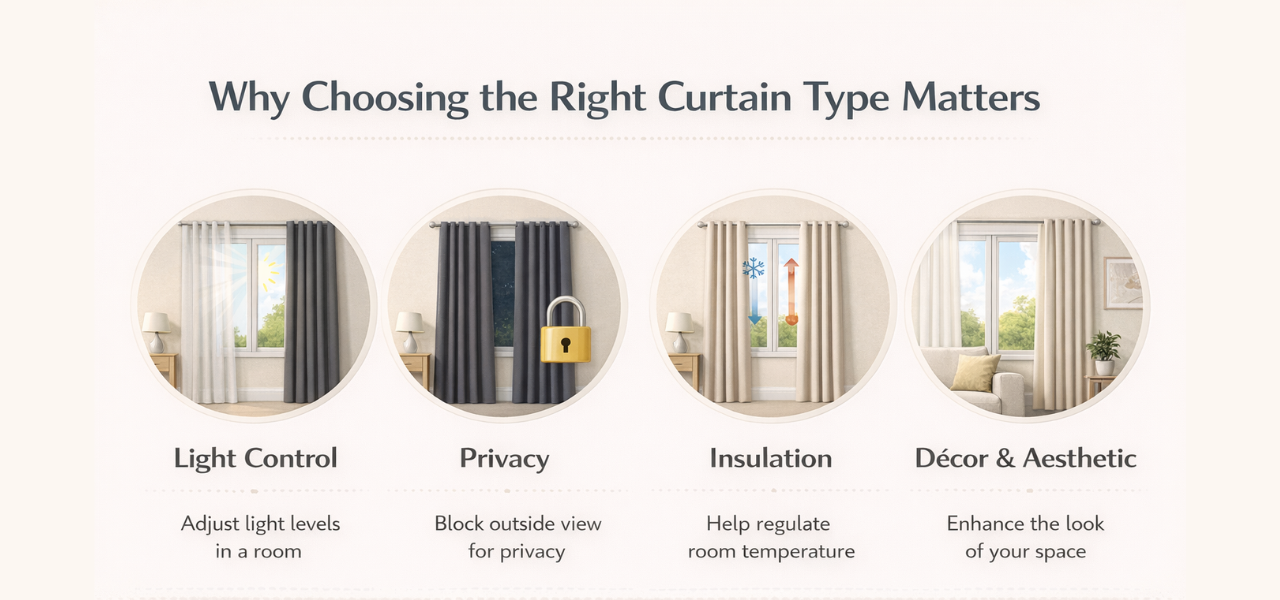
Before diving into specific curtain types, let’s understand why this decision deserves your attention:
Light Control: Indian homes face intense sunlight, especially during summer months. The right fabric blocks harmful UV rays while maintaining brightness.
Privacy: Ground floor apartments and homes facing busy streets need curtains that protect your personal space without making rooms feel like caves.
Style Impact: Curtains occupy significant visual space. They can make ceilings look higher, rooms feel larger, or create a cozy atmosphere—depending on what you choose.
Energy Efficiency: Thermal curtains can reduce air conditioning costs by blocking heat. In cities like Delhi, Ahmedabad, or Hyderabad, this makes a real difference to electricity bills.
Weather Suitability: Monsoon humidity in Mumbai or Chennai demands different fabrics than the dry heat of Rajasthan. Your curtain fabric types should match your climate.
Cotton remains the most practical choice for Indian homes. It’s breathable, easy to wash, and affordable. Cotton curtains work well in bedrooms and living rooms, offering moderate light filtering without complete darkness.
Best for: Everyday use, moderate climates, homes with children or pets.
Linen brings a relaxed, elegant look to modern interiors. This natural fabric allows some light through while maintaining privacy. However, linen wrinkles easily—something to consider if you prefer crisp, ironed appearances.
Best for: Living rooms, balconies, homes with minimalist or Scandinavian design themes.
Heavy and luxurious, velvet curtains add drama and sophistication. They’re excellent light blockers and provide some soundproofing. The downside? Velvet attracts dust and requires professional cleaning.
Best for: Master bedrooms, formal living rooms, homes in cooler regions like Shimla or Darjeeling.
Budget-friendly and low-maintenance, polyester curtains resist wrinkles and fading. They’re available in countless prints and colors. While not as breathable as natural fabrics, modern polyester blends perform well in most Indian homes.
Best for: Rental apartments, kids’ rooms, budget-conscious buyers.
Silk curtains scream elegance but demand careful maintenance. They fade quickly in direct sunlight and need dry cleaning. Consider silk blends instead of pure silk for better durability.
Best for: Formal dining rooms, guest rooms, homes in humid climates (silk handles moisture better than velvet).
Light, translucent sheer curtains diffuse harsh sunlight while maintaining a bright, airy feel. They offer minimal privacy but work beautifully when layered with heavier curtains.
Best for: Layering, balconies, rooms with pleasant views, north-facing windows.
These blackout curtains block 99% of light and UV rays. Essential for shift workers, parents with young children, or anyone sensitive to morning light. They also reduce outside noise and regulate temperature.
Indian Context: Perfect for west-facing windows in cities like Pune or Bangalore where afternoon sun becomes unbearable.
Thermal or insulated curtains contain special lining that blocks heat transfer. They keep rooms cooler in summer and warmer in winter, directly cutting energy costs.
Indian Context: Highly recommended for top-floor apartments in Delhi-NCR or homes in Rajasthan.
Made from heavy, dense fabrics, soundproof curtains reduce external noise—honking traffic, construction sounds, or noisy neighbors. While not completely soundproof, they make a noticeable difference.
Indian Context: Essential for homes on main roads in Mumbai, Kolkata, or any metro city.
Combining sheer curtains with heavier drapes gives you flexibility. Use sheers during the day for filtered light and privacy. Close the outer layer at night for complete darkness.
Indian Context: Ideal for living rooms where you need versatility throughout the day.
The way curtains hang affects both function and appearance. Here are popular modern curtain styles:
Eyelet curtains feature metal rings at the top, creating neat, uniform pleats. They slide easily on rods and suit contemporary interiors. This style dominates Indian furniture stores because it’s practical and looks clean.
Best for: Modern apartments, minimalist décor, easy DIY installation.
Pencil pleat curtains have gathered fabric at the top, creating a traditional, tailored look. They use hooks and require curtain tape but offer adjustable fullness.
Best for: Traditional or eclectic interiors, formal spaces.
More structured than pencil pleats, pinch pleat curtains have fabric pinched together at regular intervals. They create elegant, timeless window curtain designs.
Best for: Large windows, formal dining rooms, classic interiors.
The fabric forms a pocket at the top where the rod slides through. This creates a gathered, casual look. However, they’re harder to open and close frequently.
Best for: Stationary curtains, valances, casual spaces like kitchens.
Fabric loops attach the curtain to the rod, creating a relaxed, cottage-style appearance. The loops become a design element themselves.
Best for: Kids’ rooms, casual spaces, beach or farmhouse themes.
Your living room demands living room curtain ideas that balance style with practicality. Floor-length curtains in neutral tones or subtle patterns work universally. Consider dual layers—sheers for daytime, heavier drapes for evening privacy.
Recommended: Cotton-linen blends, eyelet or pinch pleat style, colors matching your sofa or accent wall.
Bedroom curtain types should prioritize sleep quality. Blackout curtains in calming colors help you rest better. If complete darkness feels claustrophobic, try dual layers with thermal backing.
Recommended: Velvet or polyester blackout curtains, pencil pleat or eyelet style, deep blues, greens, or warm neutrals.
Kitchen curtains face grease, moisture, and frequent washing. Choose easy-care fabrics in shorter lengths (café style or tier curtains).
Recommended: Polyester or cotton-poly blends, rod pocket style, bright colors or cheerful patterns.
Balcony curtains handle weather exposure—sun, rain, wind, and dust. Outdoor-rated fabrics or washable synthetics perform best.
Recommended: Polyester or treated cotton, tie-backs for flexible opening, light colors to reflect heat.
Home office curtains need to reduce glare on computer screens while maintaining a professional appearance.
Recommended: Linen or sheer curtains, neutral colors, simple eyelet or tab top styles.
Interior design evolves, and modern curtain styles reflect current preferences:
Dual-Layer Systems: Sheer inner curtains with textured outer panels give maximum flexibility. This remains the top choice in Bangalore, Hyderabad, and Pune apartments.
Minimal Neutral Palettes: Beige, cream, soft gray, and white dominate. These colors make rooms feel larger and complement any décor changes.
Floor-Length Drama: Curtains that puddle slightly on the floor create a luxurious, hotel-like feel. Extra length also blocks draft gaps.
Textured Fabrics: Linen-look polyester, slub cotton, and jacquard weaves add visual interest without busy patterns.
Follow this simple decision framework:
Step 1: Measure Your Windows Note height, width, and whether you want sill-length, floor-length, or puddling curtains. Add 6-12 inches to width for proper fullness.
Step 2: Decide Light Requirements Need complete darkness? Choose blackout. Want soft, filtered light? Opt for sheers or light cotton.
Step 3: Choose Fabric Match fabric to room function and climate. Kitchens need washable synthetics; bedrooms benefit from heavier fabrics.
Step 4: Select Style Modern homes suit eyelet curtains. Traditional spaces look better with pinch or pencil pleats.
Step 5: Match Colors Coordinate with your largest furniture piece or wall color. Neutrals always work; bold colors should complement existing accent colors.
Too-Short Curtains: Curtains should kiss the floor or hover 1-2 inches above. Anything shorter looks unfinished and cheap.
Wrong Fabric for Humidity: Velvet curtains in Mumbai’s monsoon invite mold. Choose cotton or polyester for humid climates.
Ignoring Curtain Rod Style: Your beautiful curtains need proper hardware. Match rod finish to other room metals (door handles, light fixtures).
Overmatching Wall Color: Curtains in the exact wall shade disappear. Choose a shade lighter or darker for definition.
Understanding different types of curtains transforms what seems like an overwhelming choice into a straightforward decision. Consider your room’s purpose, India’s diverse climate challenges, and your personal style preferences. Whether you choose blackout curtains for your bedroom, sheer curtains for the living room, or modern eyelet curtains throughout, the right choice enhances both function and beauty.
Start by identifying your primary need—light control, privacy, or style. Then select fabric, heading style, and color accordingly. With this knowledge, you’ll confidently choose curtain types that make your house feel like home.
Q1: What are the most popular curtain types in Indian homes?
Eyelet curtains lead in popularity due to their modern look and easy operation. Cotton and polyester fabrics dominate because they balance affordability with durability. Dual-layer systems combining sheers with heavier drapes are increasingly common in metro cities.
Q2: Which curtain type is best for living rooms?
Floor-length curtains in neutral colors work best for living rooms. Choose cotton-linen blends or quality polyester with eyelet or pinch pleat headings. Dual-layer systems offer maximum versatility for day and evening use.
Q3: What are different types of curtains for bedrooms?
Bedrooms benefit from blackout curtains in calming colors—navy, forest green, charcoal, or warm beige. Velvet or blackout polyester fabrics ensure better sleep. Pencil pleat or eyelet styles work equally well depending on your décor theme.
Q4: Are blackout curtains better for Indian homes?
Blackout curtains excel in west-facing rooms, top-floor apartments, or cities with extreme heat. They reduce cooling costs and protect furniture from sun damage. However, they’re not necessary for all rooms—living rooms often work better with lighter fabrics.
Q5: How do I choose between different types of curtains?
Start with function: Do you need light blocking, privacy, or just decoration? Then consider climate—humid regions need breathable or synthetic fabrics. Finally, match style to your interior theme. When in doubt, neutral-colored eyelet curtains in medium-weight fabric suit most Indian homes.

Contact Bazel for quick and reliable assistance with your home décor needs. Whether you have questions about cushion covers, orders, shipping, or returns, our team is here to help you every step of the way.
© 2026 bazel.in All rights reserved.


 Chat Now
