Cotton Blend Fabric You’re shopping for bedsheets at a local store in Mumbai or browsing kurtas online. The label says “Cotton Blend” instead of “100% Cotton.” You pause. Is it good quality? Will it be comfortable in summer? Should you buy it or not?
If you’ve ever faced this confusion, you’re not alone. Millions of Indian shoppers struggle to understand what is cotton blend fabric and whether it’s a smart choice for clothing or home décor.
In this blog, we’ll break down everything about cotton blends — from its meaning and types to its pros, cons, and uses in India. By the end, you’ll know exactly what to look for before making your next purchase.
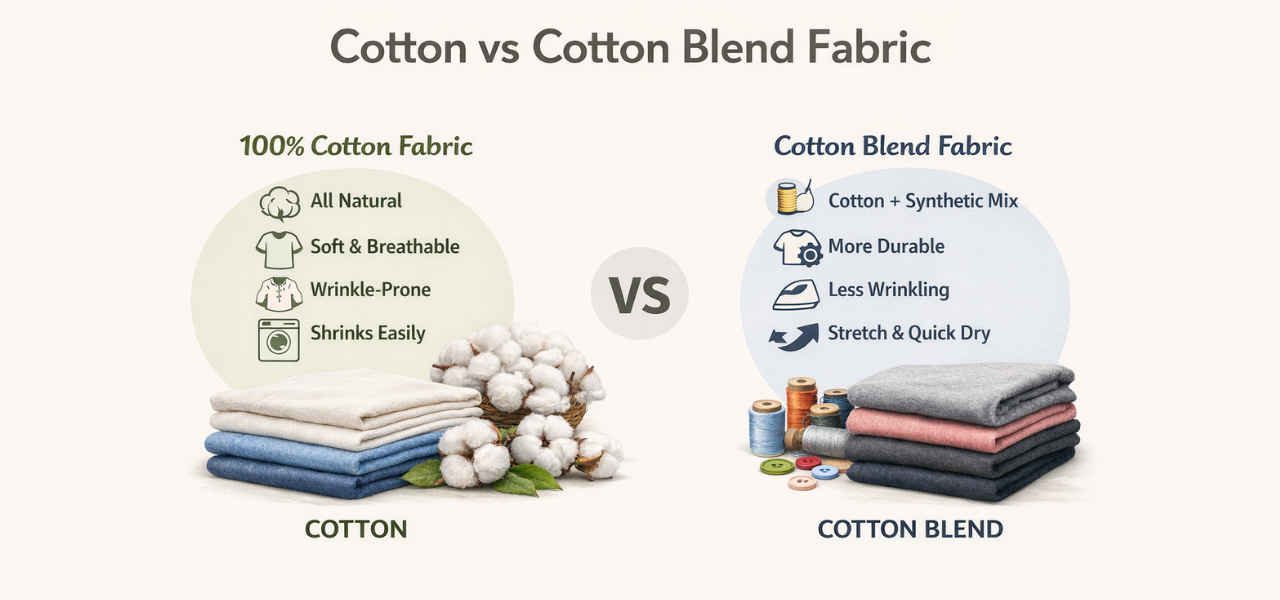
Cotton blend fabric is a textile made by combining natural cotton fibers with one or more synthetic or semi-synthetic fibers like polyester, spandex, rayon, or linen.
Instead of using 100% cotton, manufacturers mix cotton (usually 50% to 80%) with other materials to improve specific qualities like durability, stretchability, wrinkle resistance, or cost-effectiveness.
For example, a cotton-polyester blend (often called poly-cotton) is one of the most popular fabric choices in India for shirts, school uniforms, and bedsheets.
The term cotton blend meaning is straightforward: it’s a fabric that blends cotton with another fiber.
Think of it like mixing tea with milk. Pure tea is strong but might feel too intense. Adding milk balances the taste. Similarly, blending cotton with polyester or spandex balances comfort with practicality.
Cotton gives softness and breathability. The other fiber adds strength, stretch, or quick-drying properties. Together, they create a fabric that’s easier to maintain and more affordable than pure cotton.
Here are the most common types of cotton blends you’ll find in Indian markets:
| Factor | 100% Cotton | Cotton Blend |
|---|---|---|
| Comfort | Highly breathable and soft | Slightly less breathable |
| Durability | Wears out faster | More durable and long-lasting |
| Wrinkles | Wrinkles easily | Wrinkle-resistant |
| Shrinkage | Shrinks after washing | Minimal shrinkage |
| Price | More expensive | Budget-friendly |
| Maintenance | Requires ironing | Easy to care for |
| Best For | Sensitive skin, summer wear | Daily wear, office use |
This cotton vs cotton blend comparison shows that both have their place. Your choice depends on your needs.
Many people ask: cotton blend fabric is good or bad? The answer isn’t black and white. Let’s weigh both sides.
Overall, cotton blends are practical for everyday use but may not suit everyone, especially those with allergies or living in very hot climates.
Cotton blend fabric uses in India are vast and varied:
Clothing
Home Textiles
Institutional Use
Indian families prefer poly-cotton blends for daily use because they’re low-maintenance and budget-friendly.
India’s climate varies greatly, so the answer depends on where you live.
For Summer: A polyester cotton blend can feel slightly warm compared to 100% cotton. However, modern blends with moisture-wicking technology work well for hot weather. If you live in Delhi or Rajasthan, choose blends with higher cotton percentage (70-80%).
For Humidity: In coastal cities like Mumbai or Chennai, cotton blends dry faster than pure cotton — a big advantage during monsoon season.
For Winter: Cotton blends offer enough warmth and comfort for mild winters in South India.
So, is cotton blend good for summer? Yes, if the cotton content is high and the fabric is breathable.
Here are practical shopping tips to avoid getting cheated:
1. Check the Label Look for fiber composition. It should clearly state percentages (e.g., 60% Cotton, 40% Polyester).
2. Feel the Fabric Pure cotton feels soft and natural. Blends feel smoother and slightly stiffer.
3. Burn Test (at home) Pure cotton burns with a steady flame and smells like burning paper. Polyester melts and smells like chemicals. Cotton blend does both.
4. Price Check If a “cotton” item is unusually cheap, it’s likely a blend.
5. Wrinkle Test Crumple the fabric. Pure cotton wrinkles instantly. Blends spring back.
So, what is cotton blend fabric? It’s a smart, practical choice that combines the comfort of cotton with the durability of synthetic fibers. Whether you’re buying shirts, bedsheets, or cushion covers, understanding cotton blend meaning helps you make informed decisions.
While it’s not ideal for extreme heat or sensitive skin, cotton blends are perfect for everyday use in Indian households. They’re affordable, low-maintenance, and long-lasting.
Buying Tip: For best results, choose blends with at least 60% cotton content. This ensures comfort without sacrificing durability.
Cotton blend fabric is made by mixing natural cotton fibers with synthetic fibers like polyester, spandex, rayon, or linen. Common ratios include 65% cotton and 35% polyester.
It depends on your needs. Cotton blends are more durable, wrinkle-resistant, and affordable. However, 100% cotton is more breathable and better for sensitive skin and hot weather.
Cotton blends shrink much less than 100% cotton. The synthetic fibers (like polyester) prevent excessive shrinkage during washing, making blends easier to care for.
Yes, if the cotton percentage is high (60-80%). Modern cotton blends with moisture-wicking technology work well for Indian summers, though they’re slightly less breathable than pure cotton.


Contact Bazel for quick and reliable assistance with your home décor needs. Whether you have questions about cushion covers, orders, shipping, or returns, our team is here to help you every step of the way.
© 2026 bazel.in All rights reserved.


 Chat Now
